About BTPA

We are a non-profit organisation run by Bowen Therapists for Bowen Therapists. We outline standards that need to be met by members to work professionally within new legislastion and regulations.

Friday, 23 March 2012

Bowen on… Bell’s Palsy


Each year in the UK, around 1 in 5,000 people develop Bell's palsy, which is characterised by a rapid onset of facial weakness. The condition can develop at any age, but is most common in those aged between 15 and 60 years.
    
In about 71% of patients, it resolves spontaneously without treatment, but 13% are left with slight facial weakness and 16% with moderate to severe weakness that results in major facial dysfunction and disfigurement.
    
Bell's palsy is due to inflammation of the facial nerve in the internal auditory canal, which results in isolated unilateral lower motor neurone palsy, with impairment of all facial movements on the affected side, including blinking.
    
Conventional medical treatment includes eye protection, drugs (i.e. corticosteroids, antivirals), surgery and physiotherapy. However the Bowen Technique has been successful in treating the condition.
 
By releasing stress at a very deep level, via its calming effect on the Autonomic Nervous System, Bowen sets the scene for the body to heal itself. In contrast to many other hands-on therapies, Bowen does not attempt to force the body to change; rather it asks the body to recognise and make the changes necessary to bring it back to homoeostasis (physiological equilibrium).

Wednesday, 14 March 2012

A quick history of massage…

Massage is one of the earliest forms of medical treatment dating back to thousands of years BC in Egypt and China. 

The first images of humans kneading others were inscribed into ancient tombs of Egyptian pharaohs and still exist today. “The Yellow Emperor’s Classic of Internal Medicine” from the Chinese dates to 2,700 B.C. It contains the earliest written record of massage techniques. 


In around 1,000 BC Japanese monks studying Buddhism in China observed the healing properties of Chinese medicine including massage techniques that were taken to Japan and developed into Shiatsu massage found in Japan today.  

Ayurveda is the traditional holistic medical system in India. Texts detailing Ayurvedic principles and practices were written sometime between 1500 and 500 B.C. Based on these texts, Ayurveda was widely adopted throughout India and Southeast Asia. 

Hippocrates, who was known to be the Father of Western Medicine, stated that a doctor needed to be proficient in many things, especially rubbing because it was this rubbing that could loosen a rigid joint as well as bind a joint that is too loose. 

During the Roman era Julius Caesar had massages every-day to relieve his neuralgia. Even athletes in Ancient Greece employed massage to keep their bodies in peak condition before competitions. 

A 19th century Swedish doctor named Per Henrik Ling developed the most common type of massage used today which is the Swedish massage. This massage therapy also included techniques founded in China, Greece, Rome and Egypt. In 1894, the massage techniques of Physiotherapy was established by the Society of Trained Masseurs.

 Although, not technically massage but just as relaxing the Bowen Technique is an original system Developed in Australia by the late Tom Bowen (1916-1982), a very intuitive, gifted and self taught healer, who devoted a lifetime to develop his original technique independently from any medical or bodywork background. 


The treatment includes gentle but powerful soft tissue mobilisation that affects the body both structurally and energetically to restore its self healing mechanisms. It is painless, non invasive and safe to use on anyone from the newborn to the elderly and provides lasting relief from a wide variety of acute or chronic conditions.

Tuesday, 6 March 2012

Take control of hay fever this year, the natural way...


It's that time of the year again; as well as longer, brighter days around 15 million people in the UK will be dealing with dreaded hay fever.

The higher pollen counts in the Spring/Summer season brings about symptoms of hay fever such as: frequent sneezing, runny or blocked nose, itchy, red or watery eyes (also known as allergic conjunctivitis), an itchy throat, mouth, nose and ears. Less common symptoms include: the loss of sense of smell, facial pain (caused by blocked sinuses), sweats and headaches. Many of these symptoms can interfere with an individual’s sleep and daily activities at school or at work.


There are many drugs, antihistamines and nasal sprays on the market claiming to help hay fever sufferers, however many can result in side effects like drowsiness. The Bowen Technique on the other hand is a natural, drug-free non-invasive, complementary therapy that can also help treat this seasonal disorder, but without the side effects.


The Bowen technique prides itself on being able to trigger the body’s own healing systems. Rather than 'making' the body change, Bowen 'asks' the body to recognise the ailment and make the changes it requires. With primarily fingers and thumbs, the Bowen practitioner makes small, rolling movements over muscles, tendons, ligaments and soft tissue at precise points on the body, using only the amount of pressure appropriate for that individual. No hard-tissue manipulation or force is needed or used. Between each set of moves, the body is allowed to rest for a few minutes, to allow it to absorb the information it has received and initiate the healing process.


Bowen practitioner Carole Hough has been treating her client since last year who says, “Since starting my Bowen sessions I have a general feeling of well-being, I feel calmer and more relaxed. As regards to specific problems I no longer have hay fever and therefore no need for use of antihistamines.”


If you suffer from hay fever and are interested in Bowen Therapy, find a qualified Bowen practitioner near you by visiting http://www.bowen-therapy.co/Bowen/btpa-find-therapist.asp or call 0844 561 7173

Wednesday, 29 February 2012

Surgery – placebo or justified?

Researchers in Oxford are hoping to find out if a commonly-performed operation used to treat shoulder pain actually works – or whether its success can be attributed to the placebo effect.

The use of a surgical technique called arthroscopic sub-acromial decompression has increased by more than 700 per cent in the past ten years but there is no hard evidence to show how effective it is. There is a growing concern that the vast increase in the frequency of the operation being performed needs to be justified.

Now a team at Nuffield Orthopaedic Centre are comparing the effectiveness of the operation with a placebo operation as there are a number of conflicting views about the effectiveness of surgery for shoulder pain.

While some reports show that arthroscopic or keyhole surgery is no more effective than physiotherapy to relieve pain, others show that it can be helpful and provide a useful treatment option. Other results suggest that removing a piece of bony spur from the shoulder - a procedure known as decompression – during surgery may be unnecessary, and that actual process of undergoing investigative arthroscopy can in itself produce benefit.


“The fact that a period of no treatment can also be beneficial for patients completes a rather confused picture,” added Ms Cooper. “It’s quite clear that we need to perform some definitive studies to show what really helps people with this type of shoulder pain. Pressures in the NHS are such that surgeons are being encouraged to prove the benefits of their practice, so that’s what we hope to do in this study.”

Surgery should be the last choice for sufferers of shoulder pain with many effective treatments available. The Bowen Technique helps the body remember how to heal itself. The gentle yet powerful Bowen moves send neurological impulses to the brain resulting in immediate responses of muscle relaxation and pain reduction. The moves create energy surges.  Electrical impulses sent to the nervous system remind the body to regain normal movement in joints, muscles and tendons. This helps relieve muscle spasms and increase blood and lymph flow.

Wednesday, 22 February 2012

Massage to be rolled out into primary schools

Schools across the country have begun to introduce massage as a daily subject along-side science, English and maths.

The new initiative aims to help the children de-stress after lunch by performing light massage movements on each other through their clothes.

Research has shown that the treatment can aid concentration and contribute to a calmer working environment. It is thought the massage will help the children learn to respect each other and themselves.

The parents must give permission for their child to be involved and the schools that have been part of the scheme so far have had pleased with the feedback from the children and parents. 

One parent who supported the scheme said: 'Apparently it is doing really well in other schools so it is worth a try. It might calm them down a bit. My daughter enjoys it and she even does it to me.'

Head of the 550-pupil school, Mrs Hobson, said: 'It makes such a difference to the way the children calm down and get focused on their work.

'Actually, they end up getting far more done in the afternoon than if they are still all a bit jittery from having been out playing football or running around with their friends or whatever.

'I first saw peer massage in one of the local schools in Sheffield and I noticed how calming it was for the children and how well they managed to get on with their work in the afternoons.”


Tuesday, 21 February 2012

BTPA & London RSI Support Group join forces...


The BTPA (Bowen Therapy Professional Association) is joining forces with the Central London RSI Support Group on Tuesday 28th February 2012, one day ahead of International RSI day.

The meeting being held between 6.30-8.30pm, at Lucas Arms, Upstairs Function Room, 245a Gray's Inn Road, London. WC1X 8DP is part of the Central London RSI Support Group’s regular monthly meetings, which are free to attend and open to all. The difference with this month’s meeting is that Claire Harrison, Chairwoman of the BTPA will be attending in order to talk about Bowen Therapy, the benefits it can have for people who suffer from RSI (repetitive strain injury) and a clinical trial that the BTPA is currently undergoing with regards to RSI.


Repetitive Strain Injuries (RSIs) remain not only the most common type of disabling injury in our worksites, it is on the rise, as our workloads are pushed beyond manageable or achievable levels. Thousands of people already have the aches, pains, tingling, swelling and loss of joint movement and strength that left untreated can develop into full blown RSI injuries.


The Bowen Technique is a natural, drug-free non-invasive complementary therapy that prides itself on being able to trigger the body’s own healing systems. Rather than 'making' the body change, Bowen 'asks' the body to recognise and make the changes it requires. With primarily fingers and thumbs, the Bowen practitioner makes small, rolling movements over muscles, tendons, ligaments and soft tissue at precise points on the body, using only the amount of pressure appropriate for that individual. No hard-tissue manipulation or force is needed or used. Between each set of moves, the body is allowed to rest for a few minutes, to allow it to absorb the information it has received and initiate the healing process.

Claire Harrison from the BTPA, will be available from 6.30pm-7.30pm to answer any questions about the Bowen technique and demonstrate how Bowen therapy works.


For further information on Bowen therapy or the BTPA


For further information on the Central London Support Group, RSI or the meeting on

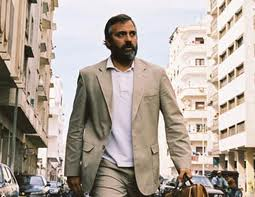
George Clooney; also one of the many to suffer from back pains...

George Clooney has opened up about the pain he suffered after cracking his head open during a torture scene in his movie, Syriana in 2005, revealing it took doctors weeks to figure out exactly what was wrong with him.

George Clooney in Syriana

It was only when pal Lisa Kudrow's neurologist brother discovered fluid leaking from his spine that medics realised just how serious his condition was.

In a candid new interview with The Hollywood Reporter, Clooney tells the publication he struggled with the strong pain medication he was prescribed after doctors fixed the problem during a marathon surgery session on Christmas Day 2005.

He adds: "They'll hand you a giant tub of Vicodin, which is not a good drug for me; I had a lot of stomach pain and I really didn't like the high it gave me.

"Then there were other drugs. I was on morphine for a while, which created this horrible anxiety where I really thought I was in trouble."


Clooney reveals he finally turned to therapy: "I went to a pain-management guy whose idea was, 'You can't mourn for how you used to feel, because you're never going to feel that way again'."


A national study, carried out by The Bowen Therapy Professional Association (BTPA) in the summer of 2006, showed that 95 per cent of back pain sufferers experienced either complete relief or a marked improvement, after a series of no more than three Bowen treatments. As it prides itself on being able to trigger the body’s own healing systems, Clooney wouldn’t have to suffer any of the side effects that he was experiencing with the drugs he was prescribed.

Rather than 'making' the body change, Bowen 'asks' the body to recognise and make the changes it requires. With primarily fingers and thumbs, the Bowen practitioner makes small, rolling movements over muscles, tendons, ligaments and soft tissue at precise points on the body, using only the amount of pressure appropriate for that individual. No hard-tissue manipulation or force is needed or used. Between each set of moves, the body is allowed to rest for a few minutes, to allow it to absorb the information it has received and initiate the healing process.

 If you suffer from chronic back pain like George Clooney and want to try Bowen therapy from a credible therapist visit www.bowen-therapy.co